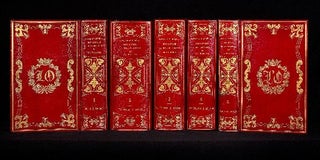
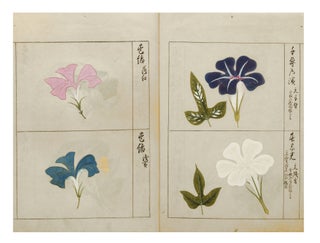
![Item ID: 11184 Nangyō hongi taishō 難経本義大鈔 [Original Meaning of Nanjin, Explained]. Genkan 森本玄閑 MORIMOTO.](https://jonathanahill.cdn.bibliopolis.com/pictures/11184.jpg?width=768&height=1000&fit=bounds&auto=webp&v=1776797437)
![Nangyō hongi taishō 難経本義大鈔 [Original Meaning of Nanjin, Explained].](https://jonathanahill.cdn.bibliopolis.com/pictures/11184_2.jpg?auto=webp&v=1776797437)
![Nangyō hongi taishō 難経本義大鈔 [Original Meaning of Nanjin, Explained].](https://jonathanahill.cdn.bibliopolis.com/pictures/11184_3.jpg?auto=webp&v=1776797437)
![Nangyō hongi taishō 難経本義大鈔 [Original Meaning of Nanjin, Explained].](https://jonathanahill.cdn.bibliopolis.com/pictures/11184_4.jpg?auto=webp&v=1776797437)
![Nangyō hongi taishō 難経本義大鈔 [Original Meaning of Nanjin, Explained].](https://jonathanahill.cdn.bibliopolis.com/pictures/11184_5.jpg?auto=webp&v=1776797437)
![Nangyō hongi taishō 難経本義大鈔 [Original Meaning of Nanjin, Explained].](https://jonathanahill.cdn.bibliopolis.com/pictures/11184_6.jpg?auto=webp&v=1776797437)
![Nangyō hongi taishō 難経本義大鈔 [Original Meaning of Nanjin, Explained].](https://jonathanahill.cdn.bibliopolis.com/pictures/11184_7.jpg?auto=webp&v=1776797437)
![Nangyō hongi taishō 難経本義大鈔 [Original Meaning of Nanjin, Explained].](https://jonathanahill.cdn.bibliopolis.com/pictures/11184_8.jpg?auto=webp&v=1776797437)
![Nangyō hongi taishō 難経本義大鈔 [Original Meaning of Nanjin, Explained].](https://jonathanahill.cdn.bibliopolis.com/pictures/11184_9.jpg?auto=webp&v=1776797437)
The Nanjin, Further Elucidated
Nangyō hongi taishō 難経本義大鈔 [Original Meaning of Nanjin, Explained].
In Chinese with Japanese reading marks. Many woodcuts & diagrams in the text. 27 vols., including one vol. of Preface, bibliography, & index; three vols. of the Nanjin & Hua Shou’s commentary; three vols. of illus. & remarks on the illus.; & 20 vols. of Morimoto’s commentary. Large 8vo, orig. semi-stiff wrappers, orig. block-printed title labels on upper covers, new stitching. Osaka: Ikedaya Saburōemon 池田屋三郎右衛門, Preface dated 1678, colophon in final volume dated 1695.
First edition of this rare and extensive commentary on the Nanjin 難經 (Classic of Difficult Issues, or, more fully, Manual of Explanations of 81 Difficult Passages in the Inner Canon of the Yellow Emperor), written in the first or second century CE. The Nanjin (or Nan ching) played a seminal role in the later development of Chinese medicine; it addresses questions concerning the location, size, and normal functions of the basic units that constitute the organism, discusses the origins and the nature of illnesses, outlines a system of therapeutic needling, and develops in great detail an innovative approach to diagnosis.
“The Nan-ching is the Chinese medical classic that provoked the largest number of commentaries in subsequent centuries. It is safe to say that in terms of intellectual importance and influence, the Huang-ti nei-ching texts [The Inner Canon of the Yellow Emperor], with their unsystematic, heterogeneous, and partly pre-systematic correspondence contents, were pushed almost into oblivion during the first millennium A.D. by the Nan-ching…the diagnostic innovations introduced by the Nan-ching gained wide acceptance in subsequent centuries and have remained, in theory at least, the dominant diagnostic tool of the practitioner of the medicine of systematic correspondence to this day.”–Unschuld, Medicine in China. A History of Ideas (Berkeley: 2010), p. 85.
The 81 chapters of the Nanjin are as follows: chapters 1-22 discuss the pulse; chapters 23-29 deal with channels and collaterals; chapters 30-47 explain visceral organs; chapters 48-61 study diseases and ailments; chapters 62-68 focus on acupoints; and the final 13 chapters explore acupuncture.
In the 14th century, the famous Chinese physician Hua Shou 滑壽 (1304-86), whom Needham describes as “one of the greatest medical writers of the Yuan times” (Celestial Lancets, p. 101 & see pp. 156-57), provided extensive commentaries on the Nanjin. To the 12 standard meridians, Hua Shou was the first to add two extra meridians, the “governor vessel” (du mai) and “conception vessel” (ren mai); the 14 meridians then became the standard major meridians in most schools of clinical application.
Several editions of Hua Shou’s commentary were published in Japan in two volumes under his Japanese name, Ju Katsu. The present work is a further extensive commentary on the Nanjin and Hua Shou’s own commentary. Little is known about Morimoto except that he was a doctor in Nagasaki.
This set is complete and in fresh condition. There is some mostly marginal worming to many of the volumes.
Price: $15,000.00
Item ID: 11184